Steps to Register a Purebred Dog That Lacks Official Papers
Understanding the Registration Process for a Dog Without Existing Documents
When you own a purebred dog that arrived without formal registration papers, getting it officially documented can feel complicated. Many owners assume a missing certificate means the dog cannot be registered at all. That is not the case. A number of registries accept dogs whose history is known to the owner even when no paper trail exists. The key is to provide the right evidence and follow a clear process. This article walks through the practical steps to obtain registration papers for a dog that has no prior documentation, with a focus on what to watch for at each stage.
Step 1: Confirm the Dog's Breed Type and Pedigree Information
Before you begin any registration process, you need to be certain about the dog's breed and its lineage. Purebred status usually depends on both parents being registered with a recognised breed club or kennel club. If you do not have parent information on paper, gather what you can from the person who sold or gave you the dog. Ask for the names and registration numbers of the sire and dam, even if those details are not on a formal certificate. Some registries will accept a signed statement from the breeder or previous owner that confirms the parentage. Without this, you may need to rely on breed-specific DNA tests that compare your dog's genetic markers against a reference database for that breed. Watch out for registries that claim to accept any dog as purebred without proof. A legitimate registry will ask for evidence of lineage, so be prepared to supply whatever you can.
Step 2: Gather Ownership Details and Dog Identification Records
Registration requires proof that you are the legal owner. Collect your adoption or purchase receipt, a signed transfer of ownership form, or a dated letter from the previous owner. Also gather identification records for the dog itself: microchip number, tattoo or ear tag, and clear photographs showing the dog from multiple angles. Some registries require a recent veterinary examination report that describes the dog's physical characteristics and confirms it is in good health. If the dog has a known breed-specific marking or colour pattern, include that in your records. A common mistake is submitting only one form of identification. Registries often cross-check multiple records, so provide as many as you can. Digital documents, such as scanned receipts or photos, are usually acceptable, but check whether the registry requires originals or certified copies.
Step 3: Locate a Registry That Handles Dogs Without Prior Papers
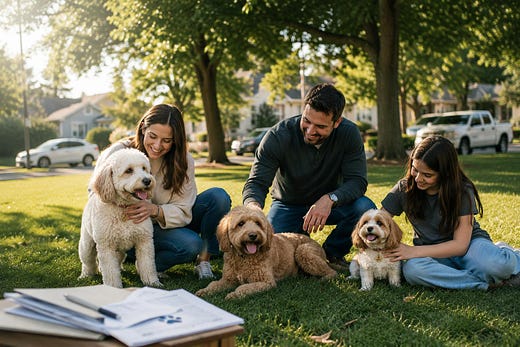
Not every registry works with dogs that lack existing papers. Some require a complete paper trail from the breeder to the first owner and then to you. Others have a specific process for what they call "owner-registered" dogs. Look for a designer dog registry that explicitly mentions registration for dogs without prior documentation. The site context for this article points to an online registry that helps owners document purebred designer dogs and obtain registration papers for dogs without existing papers. That type of service is designed for exactly this situation. When evaluating a registry, read the terms carefully. Some charge a higher fee for dogs without papers, while others require a waiting period before the registration becomes valid. Avoid registries that promise instant approval with no questions asked. A proper registry will want to verify the dog's background, even if that verification takes time.
Step 4: Prepare a Statement of History for the Dog
Most registries that accept dogs without papers will ask you to write a signed statement describing the dog's history. This statement should include how you acquired the dog, where it came from, the names and contact details of any previous owners or breeders you know, and what you know about its lineage. Be honest if information is missing. Registries understand that some dogs come from rescue situations or from owners who kept poor records. A truthful explanation is better than a fabricated one. The statement should also include details about the dog's age, approximate date of birth, and any health or vaccination records you have. Some registries require the statement to be notarised. Check whether digital signatures are accepted. If the registry requires a wet signature and a physical copy, plan for postal delivery and allow extra time.
One important point to keep in mind: you are essentially asking the registry to issue papers for a dog without records. That means the registry has to rely on your word and the evidence you provide. The more thorough your statement, the easier the process will be. If the registry later discovers that the dog was previously registered under another name or owner, the registration could be revoked. So always provide a complete and accurate account.
Step 5: Submit the Application and Supporting Digital Documents
Once you have collected all the required information, submit your application. Many registries now accept digital documents uploaded through an online portal. This speeds up the process and reduces the chance of lost paperwork. Before you submit, double-check that every file is legible and that the file format matches the registry's requirements. Common formats are PDF, JPEG, and PNG. Label each file clearly: "Pedigree records - sire and dam names.pdf" or "Veterinary exam report - Dr Smith.pdf". If the registry requires a fee, pay it through the official payment method only. Watch out for registries that ask for payment via wire transfer or gift cards. Those are red flags for scams. A legitimate registry will accept credit cards, debit cards, or a secure online payment system.

Step 6: Follow Up on the Registration Certificate
After submission, the registry will review your application. This can take anywhere from a few days to several weeks, depending on the volume of applications and whether any information needs verification. Some registries issue a temporary registration certificate immediately upon payment and then send a permanent one after the review. Others wait until the review is complete. If you do not hear back within the expected time, send a polite follow-up email. Keep a copy of all correspondence. Once you receive the registration certificate, check it for accuracy. The breed type, dog's name, owner's name, and registration number should match what you submitted. If there is an error, request a correction right away. Delaying could cause issues if you later need to register a litter or transfer ownership.
Step 7: Keep a Backup of All Documents
Registration papers are valuable. They prove the dog's pedigree and ownership, and they are often required for breeding, showing, or travel. Make digital copies of everything: the application, the statement of history, the registration certificate, and any supporting identification records. Store them in at least two separate places, such as on your computer and in a cloud storage service. Also print a physical copy and keep it in a fireproof safe or a binder. If you ever need to transfer the dog to a new owner, you will be able to hand over a complete set of papers. This is especially important for dogs registered without prior documentation, because the new owner may have to explain the dog's history again. Having a full record saves everyone time and avoids confusion.
What to Watch For Throughout the Process
Several pitfalls can derail a registration attempt. First, be wary of registries that ask for a fee before you have submitted any information. A reputable registry will let you see the application form and understand the requirements before asking for payment. Second, avoid registries that promise a registration certificate without any verification of the dog's breed or ownership. That type of certificate is often not recognised by breed clubs or kennel clubs. Third, do not assume that registration with one registry is automatically accepted by another. If you plan to show the dog or breed it, check whether the registry you choose is recognised by the relevant breed organisations. Fourth, keep in mind that some registries require the dog to be microchipped or tattooed as part of the identification process. If your dog is not yet microchipped, you may need to schedule that before applying. Finally, understand that registration does not guarantee that the dog is purebred. It only documents what you have claimed. If you later obtain DNA evidence that contradicts your statement, the registration may need to be updated or withdrawn.

Wrapping Up the Registration Process
Getting papers for a dog without records is a straightforward process if you take it step by step. Confirm the breed and lineage, gather ownership and identification details, choose a registry that handles owner-registered dogs, prepare a thorough statement of history, submit the application with supporting digital documents, follow up on the certificate, and keep backups. Each step requires attention to detail, especially when parent information is missing or when the dog's history is incomplete. A designer dog registry that specialises in documentation for dogs without prior papers can guide you through the requirements and help ensure your registration is accepted. With patience and accurate records, you can secure the registration papers your dog deserves.